
According to Double the Donation’s volunteer statistics report, approximately one-third of the nonprofit workforce is made up of volunteers. This means that effective communication with volunteers isn’t just important for building valuable supporter relationships, but for keeping your organization running at all!
Whether you’re brand new to the space or have an established volunteer program, every nonprofit understands the necessity of staying organized and keeping everyone informed. That is why creating a multifaceted volunteer communication strategy is essential to any successful volunteer management process.
This article will walk through five foolproof ways to create a successful volunteer communications strategy that increases engagement and retention.
- Get to know your volunteers.
- Be as specific as possible.
- Use the right communication methods.
- Invite volunteers to voice feedback.
- Say thank you often.
Poor communication will naturally result in more misunderstandings, unhappy volunteers, and higher attrition. It might even deter some volunteers from getting involved with your organization at all. By prioritizing consistent and thoughtful communication, your team will make the most of the volunteer experience. Let’s get started.
1. Get to know your volunteers.
To establish meaningful connections with your volunteers, you first need to get to know them. Understanding what motivates and interests your volunteers is essential for creating personalized and engaging communications.
Leverage your volunteer sign-up form to gather initial information about your volunteers, such as their:
- Skills. Ask volunteers to share their skills or create a list of specific skills your nonprofit needs that they can choose from. This allows you to identify opportunities your volunteers qualify for and push them toward those roles.
- Interests. Understand what part of your organization each volunteer is most interested in and consider how you can help them make the most of their passion for your cause.
- Demographic details. Basic demographic information, such as supporters’ ages and location, can greatly influence how you communicate with them. For instance, you might share virtual volunteer opportunities with your remote supporters or focus your more physical-oriented activities toward younger volunteers.
- Employment information. Details about your volunteers’ careers can help you identify their qualifications and help them find opportunities that fit their schedules. Additionally, you can check if they work for a company with a volunteer time off program. These programs provide employees with paid time off specifically to volunteer, meaning qualifying volunteers have greater flexibility in when they can lend your nonprofit a hand.
Once a volunteer completes the sign-up process, this data is stored in your volunteer management platform. You should be able to filter that data based on your needs.
For example, you might want to email every volunteer who is interested in environmental causes and has volunteered for your organization in the past five months. With this information, you could send an email that promotes sustainability-related opportunities.
The more detailed your communication segmentation, the more personalized the messaging can be for your target volunteers.
2. Be as specific as possible.
With your volunteers’ information gathered and organized, begin crafting engaging content specific to each of your volunteer segments. Of course, no matter who you are reaching out to, ensure your communication is straightforward, uses limited jargon, and is easy to understand on a first read.
To create meaningful and clear messages for your volunteers, ask yourself the following when composing each email:
- What is the purpose of the communication?
- What is the desired primary action you would like your volunteers to take?
- What value are you providing your audience with the message?
By defining your goals for each message, your communication will be focused and valuable. Supporters will understand that when they receive a message from your nonprofit, they should open and engage with it promptly.
For instance, say your nonprofit is trying to educate supporters about corporate volunteer grants. In this situation, your answers to the previous questions might be:
- Purpose: Help supporters understand volunteer grants in order to earn your nonprofit additional funding
- Primary action: Supporters research their volunteer grant eligibility and apply if they qualify
- Audience value: A free opportunity to support your nonprofit
To make your points clear, you would define the term “volunteer grant” in its first use so supporters unfamiliar with this concept won’t be confused. You would then emphasize the value of these grants by focusing on how they are free to request. Finally, end with a call to action for volunteers to check their eligibility.
3. Use the right communication methods.
Let’s be honest; not everyone combs through their inbox every day. Limiting your volunteer communication strategy to a single channel will leave many people in the dark.
That's why many nonprofits leverage multiple platforms to stay in touch with their volunteers. When creating your communication strategy, take stock of your volunteers’ preferred channels. Collect this information during the volunteer sign-up process to ensure you know how to contact each volunteer from day one.
Here are the most common channels to leverage:
- In-app messaging (through your volunteer mobile app)
- SMS text messaging
- Your website
- Social media
- Phone
By circulating your messages through these channels, you will ensure that every volunteer stays updated on all the information they need to stay motivated.
4. Invite volunteers to voice feedback.
To continually improve and grow your volunteer program, review program metrics within your volunteer management software. However, numeric data alone rarely tells the full story.
Ensure you understand the on-the-ground volunteer experience by surveying participants. This two-pronged approach allows nonprofits to collect quantitative and qualitative data to evaluate their programs' strengths and weaknesses.
Collecting feedback doesn’t need to be complicated. Consider sending out a survey after a shift or once a month to all active volunteers. You can base your survey questions on whatever is currently relevant to your programs. For example, you might ask questions like:
- Do you feel supported in your role?
- Do you feel you received adequate training and direction for your role?
- Is signing up to volunteer with [Nonprofit Name] an easy process? Why or why not?
- Has your volunteer manager informed you about corporate volunteer opportunities like volunteer grants?
- Do you feel like your efforts are making an impact on our cause?
All the data you collect should be evaluated and saved for historical records. Your organization can then leverage that information to improve your program and maximize impact while delivering meaningful volunteer experiences.
5. Say thank you often.
Your volunteers donate their time, attention, and skills to your organization. They give so much, which is why it’s vital to communicate your gratitude. A simple thank you can go a long way in making your volunteers feel appreciated and valued, which can help you retain their support.
There are countless ways to show appreciation to your volunteers. A few of these include:
- A simple thank you message after a shift.
- A lunch after a big event.
- Branded merchandise like hats, mugs, and t-shirts.
- An appreciation video that communicates gratitude for their work.
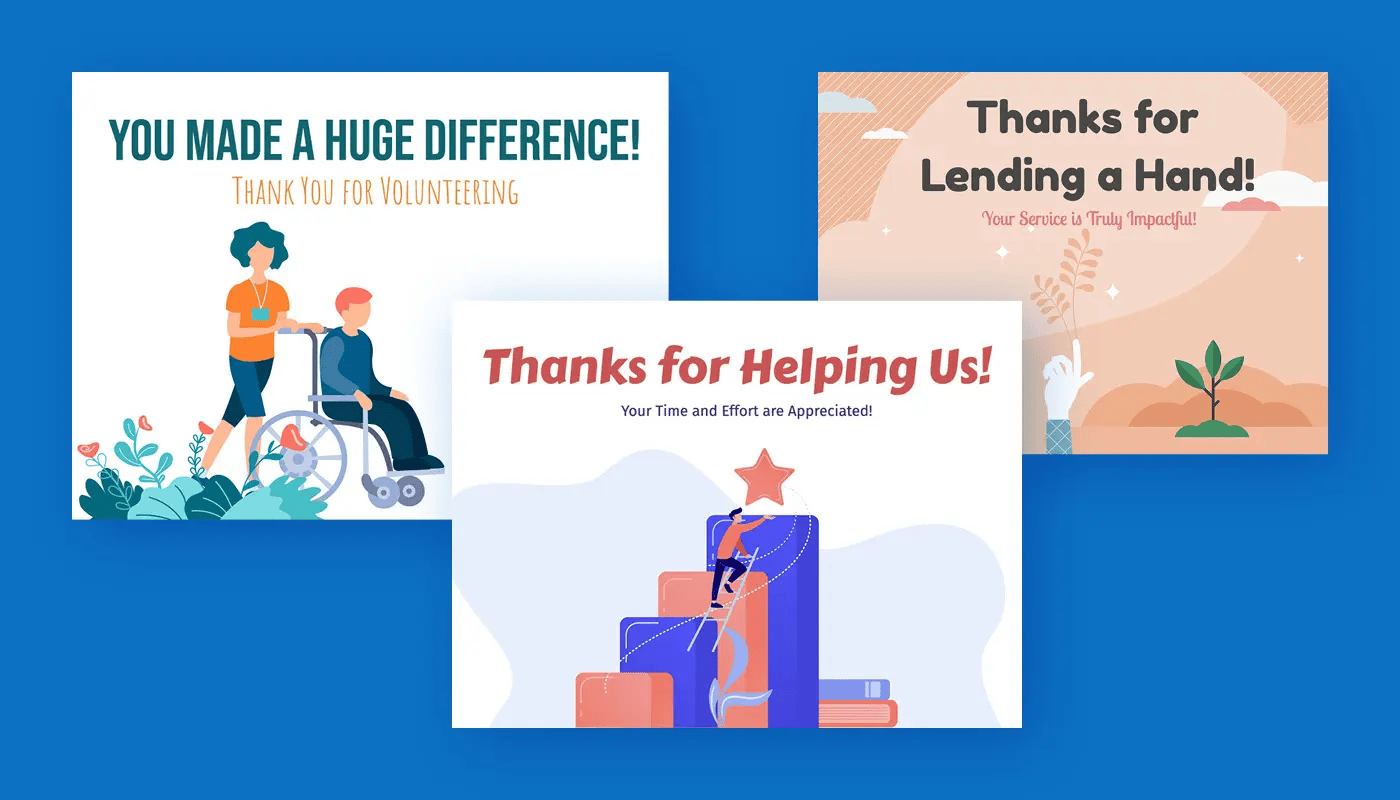
Additionally, try spicing up the classic thank-you email with eCards. eCards are electronic greeting cards that add memorable, fun visuals to your heartfelt appreciation messages. eCardWidget’s guide to volunteer appreciation shows off a few examples of what these cards might look like:
Taking the time to incorporate words and actions of gratitude in your volunteer communication strategy will set your nonprofit up for long-term success by making everyone feel valued.
Creating a volunteer communication strategy doesn’t need to be complicated. If an organization has the right team and tools in place, creating a new communication strategy should be simple. Now it’s time to start creating your volunteer communication strategy and developing messages that resonate with your supporters and enhance their experience. Remember, the more personalized the communications, the more engaged your volunteer team will be.

 Donations
 Events
 Petitions
 Forms
Forms Shop
Shop Directories