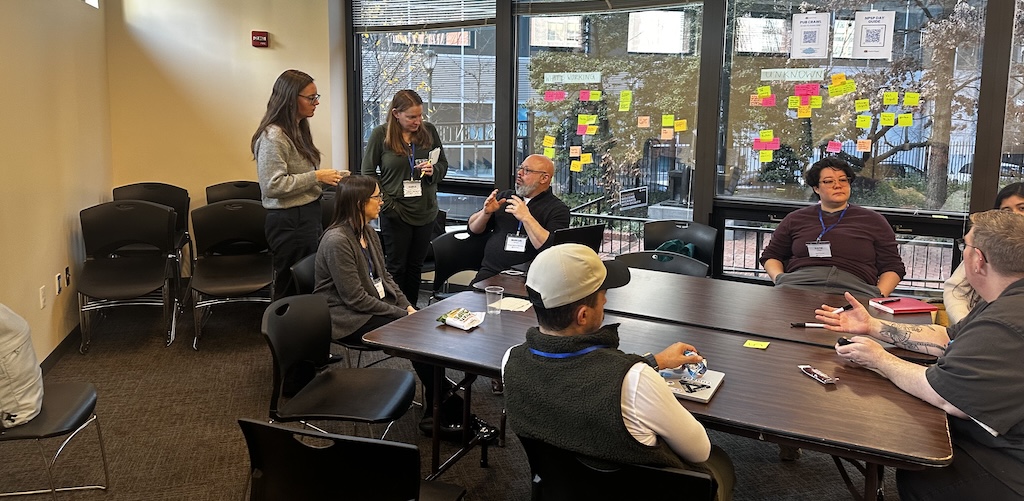
On December 4, we wrapped up our final NPSP Day of the 2025 year at the Friends Center in Philadelphia, a warm, welcoming venue for a day of community-driven learning, problem-solving, and hands-on collaboration. It was wonderful to welcome several folks from the Soapbox Engage community (thanks, YMCA of Greater Brandywine!) as well as to reconnect with longtime nonprofit tech experts like Michael Kolodner and Marcus Iannozzi.
As with every NPSP Day, we kicked things off with morning networking over coffee, followed by an opening circle, an NPSP weather report, and a forward-looking conversation with Idlewild about the evolution of nonprofit CRM strategy.
Attendees spent the afternoon breaking into sessions focused on some of the most requested topics across the community – from strengthening user adoption, to managing data hygiene, to taming complex automations. Below is a full recap of what each group explored and the key takeaways nonprofits can bring back to their teams.
- Nonprofit Accelerator (NPA) Deep Dive
- User Adoption & Training
- Project & Task Management
- Data Management & De-Duping
- Automations
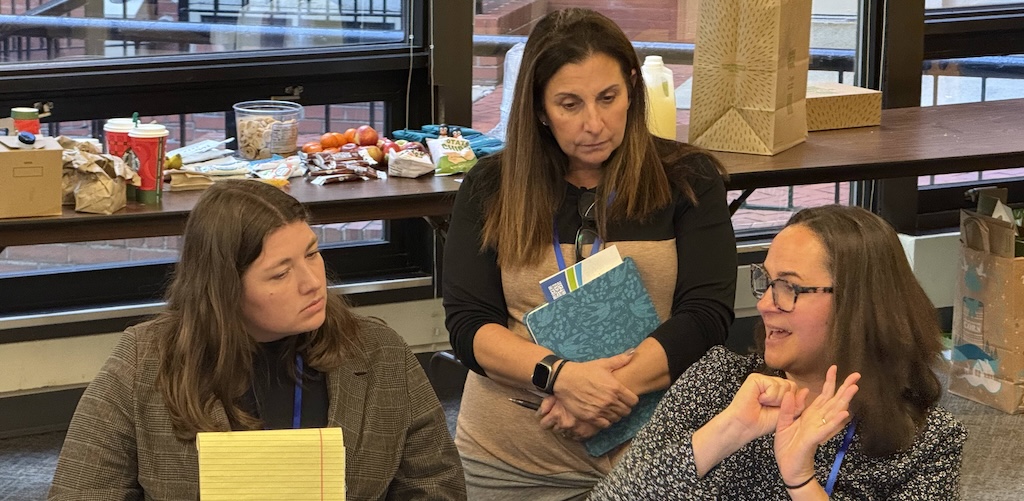
Nonprofit Accelerator (NPA) Deep Dive
This session unpacked a new solution called the Nonprofit Accelerator, including what’s included in the core package, how additional accelerators work, and what consultants and nonprofits should know about implementation. Participants also discussed the future of the NPA relative to NPSP and NPC, how to access the package as a partner, and where it fits within broader nonprofit data strategy.
Key takeaways:
- NPA Core Is Free: The base package is free for nonprofits; additional accelerators come at an added cost, while implementation support from Idlewild is separate.
- Easy Partner Access: Consultants can get access by joining a call, receiving a demo, signing an NDA, and spending two weeks exploring and providing feedback.
- Built on Standard Objects: NPA is fully unmanaged, unlocked, and deployable on any org. There is no dependency on NPSP or NPC.
- Includes a Modern Data Model: Core features include householding, campaigns, payments, deliverables, recurring donations, address mgmt, dashboards, constituent tags, and DLRS-based rollups.
- Still Requires Add-Ons: Features like GAUs/allocations, engagement plans, membership, volunteer mgmt, and automatic acknowledgements are not included in core.
User Adoption & Training
This group explored strategies for increasing user engagement, building training systems that work for different learning styles, and keeping communication consistent as orgs grow. The conversation highlighted both tactical tools and cultural approaches that make user adoption sustainable.
Key Takeaways:
- Adoption Starts with Culture: Consistent expectations (“If it’s not in Salesforce, it didn’t happen”) and validation rules help keep data clean.
- Feedback Loops Matter: User committees and open forums provide space to surface pain points and improve processes.
- Multi-Modal Training Works Best: One-pagers, screen recordings, in-app guidance, office hours, and group classes all serve different learner types.
- Communicate Early & Often: Regular release notes or weekly updates help users feel informed rather than surprised.
- Empower Superusers: Building relationships with power users strengthens internal support and reduces admin bottlenecks.
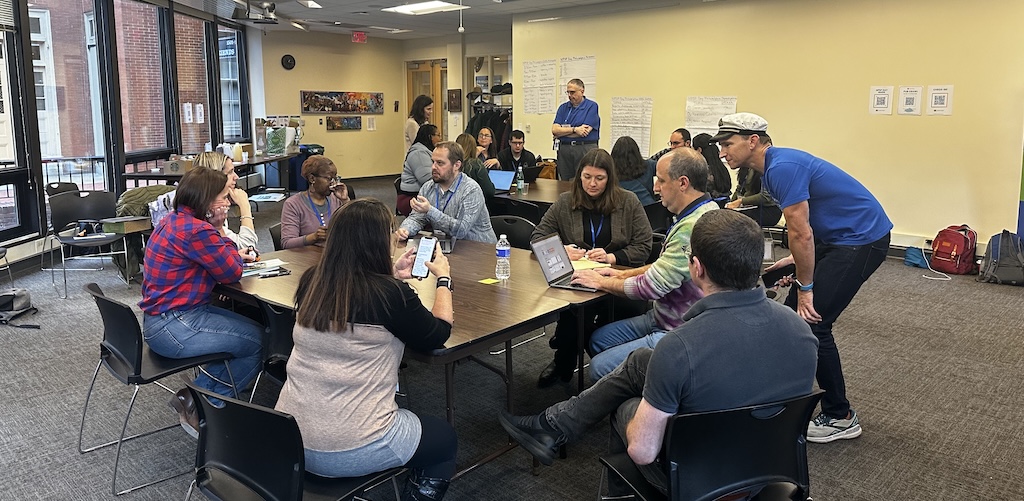
Project & Task Management
This session focused on how nonprofits track internal work, Salesforce requests, and cross-team project flow, whether through native Salesforce tools or external systems.
Key Takeaways:
- Asana Integrations Typically Cost Extra: Most orgs need a paid plan to sync Asana to Salesforce.
- Jira Works for Complex Workstreams: Some teams manage Salesforce request queues via Jira or similar ticketing tools.
- Custom Objects Are Viable: One org shared success using a custom Salesforce object for tracking internal requests.
- Native Tools Can Work: When implemented well, Tasks and Chatter can support frontline fundraisers and accountability.
Data Management & De-Duping
In this session, participants dove into data hygiene ownership, duplicate detection, mass deletion strategies, and the strengths of tools like Apsona and DemandTools. The group shared real examples and practical tips for establishing ongoing accountability.
Key Takeaways:
- Ownership Is Essential: Someone must have the time and responsibility to actively manage duplicate records and hygiene processes.
- Use NPSP Tools First: The NPSP Merge component performs better for nonprofits than Salesforce’s standard merge tools.
- Dashboards of Zeroes Help: Tracking “zero duplicates,” “zero unmapped contacts,” etc. makes issues immediately visible.
- Know Your Tools: Apsona, DemandTools, and DataLoader all have strengths; choose based on volume, complexity, and budget.
- Always Document & Backup: Clearly document processes, run backups, and understand your matching rules to prevent repeat issues.
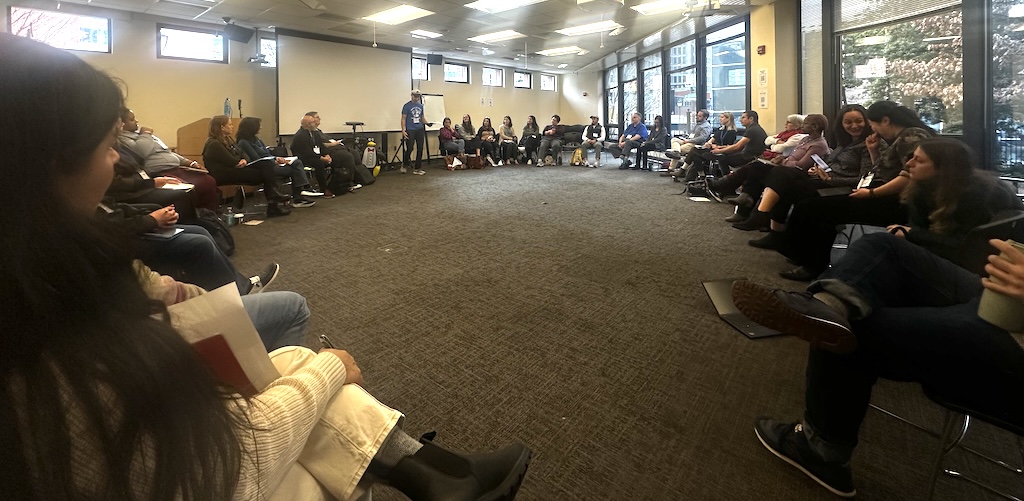
Automations
This session took a deep dive into flow best practices, debugging strategies, efficiency tips, and ways to avoid hitting Salesforce limits. Participants shared common pitfalls and tools for making automations more stable and predictable.
Key Takeaways:
- Flows Are Nearly Code-Equivalent: With proper structure, flows can replace most automation use cases previously handled by Apex.
- Beware DML in Loops: Many SOQL/Salesforce limit errors stem from DML statements inside loops; restructure where possible.
- Before-Save Flows Are Powerful: They’re more efficient and don’t require an explicit update element.
- Debug Early & Often: Use Debug mode, Flow Trigger Explorer, and sandboxes to troubleshoot and prevent cascading errors.
- Use Tools to Improve Visibility: Apps like Flow Analyzer and Nebula Logger help track performance, errors, and optimization opportunities.
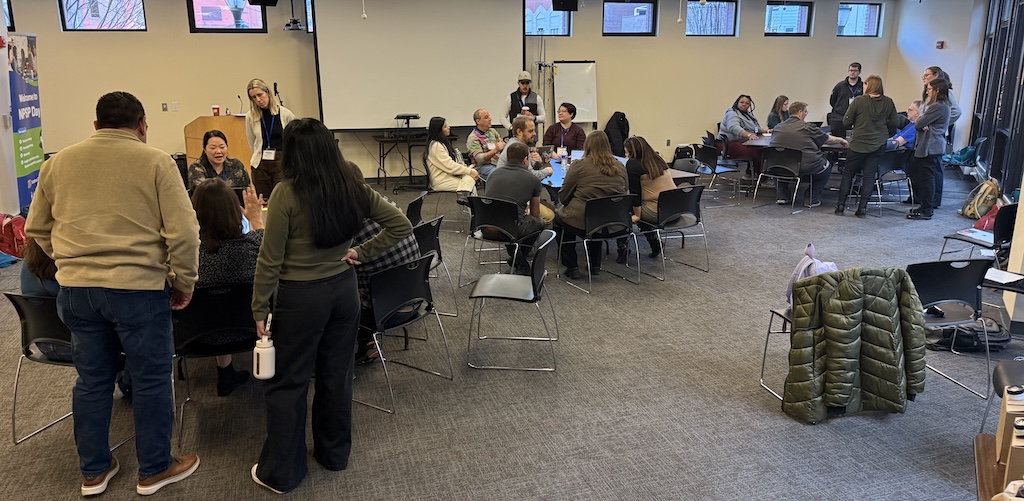
NPSP Day Philadelphia was a fitting finale to an incredible year of community learning, shared problem-solving, and cross-org connection. Thank you to everyone who joined us, contributed to the conversations, and supported one another throughout the day. A special thank you to the Friends Center for hosting, and to all the partners and volunteers who help make NPSP Days possible.
Want to join a future NPSP Day? Stay tuned for our 2026 calendar!

 Donations
 Events
 Petitions
 Forms
Forms Shop
Shop Directories